









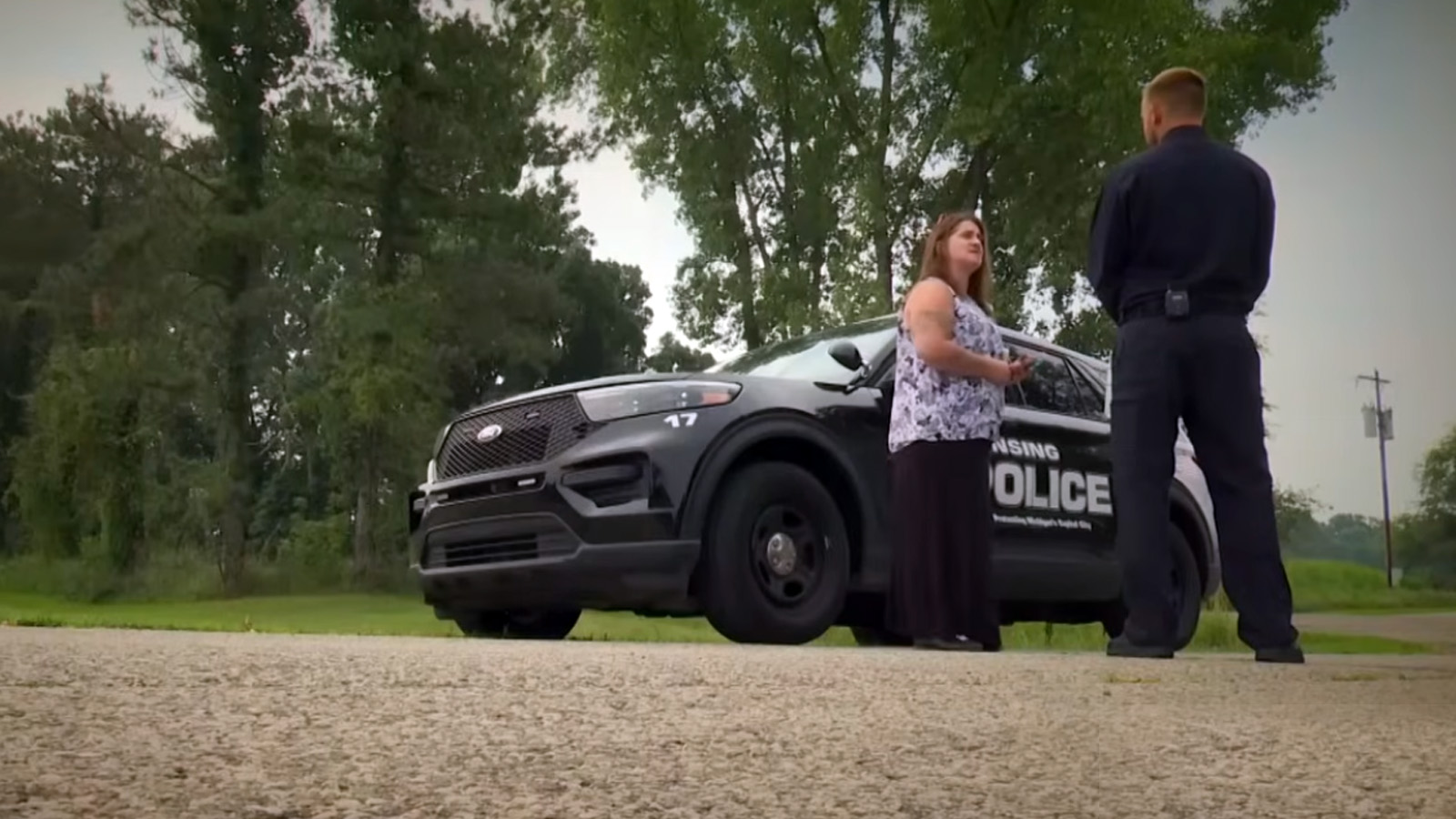
A recent news report from Eaton Rapids, Michigan described a “routine” traffic stop that became a turning point in one woman’s life. It’s a powerful reminder of why the balance of justice and mercy matters so deeply in law enforcement.
A Michigan officer pulled over a driver, only to discover an outstanding warrant and a life unraveling under the weight of addiction. He did what any of us would have done as sworn officers: he made the arrest. Months later, that same woman wrote him a long letter, describing how that encounter – handcuffs, patrol car, and all – became the doorway God used to rescue her from addiction and restore her to her children.
From the outside, that stop looked like nothing special: The officer acted on probable cause, confirmed the warrant, conducted an arrest, transported the arrestee, and completed the paperwork. For those of us who have done this job, it must have felt like just another day at the office. But in God’s hands, that moment of justice became an expression of mercy. How do we know? It’s in the woman’s letter. She didn’t describe the arrest as cruelty; she described it as the moment someone finally drew a hard line between her self‑destructive behavior and the possibility of hope and recovery.
Justice, in that instant, was focused mercy.
Every cop knows the importance of justice. We feel it when a victim tells us what happened, when we see fear in a child’s eyes, or when a repeat offender laughs his way through yet another court date. Something inside us says, “This is wrong, and it has to stop.”

That inner compass is not an accident. In his letter to Roman believers, Paul says that even people who don’t know God “show that the work of the law is written on their hearts, while their conscience also bears witness…” (Romans 2:15). This commonly recognized moral compass explains the instinct we have to confront evil and protect the innocent. It is part of our wiring as humans created in the image of a god whose throne is founded in the fullness of “righteousness and justice” on one side, “steadfast love and faithfulness” on the other (Psalm 89:14).
Later, in the same letter to the Romans, Paul described law enforcement officers as servants of God for good (Romans 13:4-5), bearing the sword to restrain those who would harm others, yet showing compassion and mercy to those who need a word from God. We stand on the thin blue line where justice and mercy meet, and that line reflects the heart of God Himself. Share on X
The Eaton Rapids report underscores this truth: justice alone was not the whole story. The woman whose life was spiraling didn’t just need a consequence; she needed a chance. The officer’s job was not to act as judge, jury, and parole board on the side of the road. His job was to faithfully enforce the law, and then entrust the larger work to God, the courts, and the people who would enter her life following her arrest. Yet, in the providence of God, his simple obedience became the first step in her recovery.
Justice opened the door; mercy walked her through it.
Micah 6:8 gives officers a three‑part mandate: do justice, love mercy, and walk humbly with God. Notice that it doesn’t say, “Do justice or love mercy.” The calling is a “both–and” opportunity. In the field, that often means making the arrest and writing the report while still speaking to the person in front of you as an image‑bearer of God rather than an arrestee to be adjudicated. It means telling the truth on the stand but also praying quietly for the addicted defendant or the angry parolee sitting at the defendant’s table.
Justice sets boundaries; mercy remembers the broken story behind the arrest.
For Christian officers, the Eaton Rapids patrol stop invites a simple question: are we sensitive to what God is doing through us in our careers? Do we see our career as a ministry opportunity? As Christians, most of our “ministry opportunities” will not occur in a prayer circle, on a missions trip, or in a chapel. They will happen on the job, in our car, on the sidewalk, in the interview room, or in the middle of reports that nobody but our supervisors and a prosecutor may ever read.
We may never get the kind of letter that Michigan officer received, but God knows the real story. So, as we put on our uniforms for the next shift, let’s remember that every “routine” call carries eternal potential:
Do justice: Let’s enforce the law, protect the innocent, and confront evil without apology.
Love mercy: Let’s talk to people like human beings, remember that no one is beyond God’s reach, and never confuse someone’s arrest record with their future potential or standing before God.
Walk humbly: Let’s acknowledge that we are not the Savior – we’re just servants of the Savior. God may use a simple traffic stop, an arrest, and a well‑written report as the first step in someone’s road to physical and spiritual recovery.
We stand on the thin blue line where justice and mercy meet, and that line reflects the heart of God Himself. Let’s help others understand God’s nature by embodying it on the job.
Have you investigated the case for Christianity? Have you committed your life to the One who is the fullness of grace and truth? Don’t waste another minute; do it today. And to learn much more about the importance of balancing justice and mercy and how this balancing act contributes to human flourishing and establishes the reliability of the Biblical record, please read The Truth in True Crime: What Investigating Death Teaches Us About the Meaning of Life.