



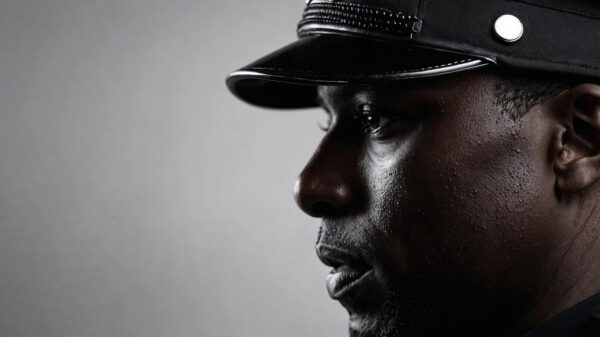


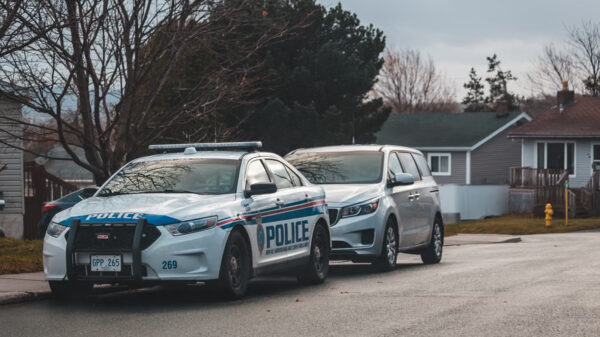





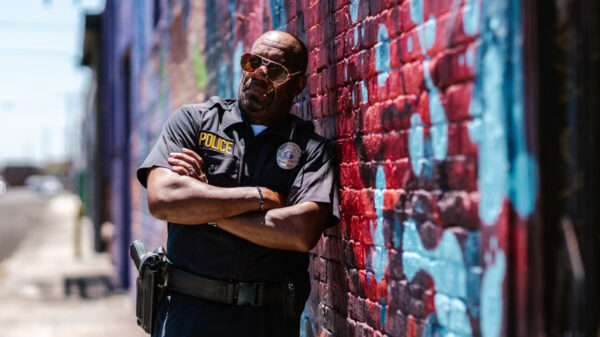



Every few weeks, a new article pops up trying to tell “the other side” of the policing story, like Police1’s ongoing “The Up-Beat: Feel-good news about cops helping people” feature. It’s a collection of real stories of officers rescuing people in danger, caring for kids, and serving vulnerable neighbors. Efforts like this highlight a critical concern for our culture and our profession. Police1 recognizes that our culture has learned to see police officers almost exclusively through the lens of controversy and criticism. Our culture has learned to see police officers almost exclusively through the lens of controversy and criticism. Share on X
Over the last decade, a handful of horrific incidents, some criminal and some badly misunderstood, have been replayed on an endless loop. In many cases, the sins of a few are treated as the identity of all of us. Complex encounters are reduced to a few seconds of video and stripped of context and due process. In that environment, “law enforcement” becomes a symbol of everything people fear or resent about authority, rather than a group of neighbors who put on a uniform to protect their communities.
From a biblical perspective, this shouldn’t surprise us. Scripture tells us that God establishes governing authorities as “his servants, sent for your good” (Romans 13:4). Yet we live in a moment that prizes radical autonomy and is deeply suspicious of almost any authority. A profession whose God‑given role is to restrain evil, “bear the sword” when necessary, and uphold justice will always clash with a culture that wants freedom without accountability.
If you listen only to the loudest voices, you might assume officers spend most of their time abusing power. The reality on the street is very different. We’ll spend an entire career walking into domestic disputes not knowing who is armed or how violent things may become, knocking on doors at 3 a.m. to deliver news that will change a family’s life forever, sitting with victims who can barely speak through their trauma, and going back, again and again, to the same broken homes and neighborhoods because there is no one else to call.
No one will record the thousands of uneventful traffic stops where people are treated with dignity. No one will post video of a suicidal subject who decides to step off the ledge because we listened, or the runaway teenager who will make it home safely at 2 a.m. As police officers, we are often the practical expression of God’s “common grace,” quietly holding back chaos so others can live in relative peace.
For those of us who are believers, the hostility is not only professional but spiritual. Romans 13 reminds us that officers serve as God’s “servants” for justice, even when the culture does not recognize or appreciate that calling. At the same time, 1 Peter 2 tells Christians to “submit yourselves for the Lord’s sake to every human institution,” including kings and governors who “are sent by Him to punish those who do wrong and to commend those who do right” (1Peter 2:13-14). When you occupy that role in a world that resents both restraint and truth, you should expect misunderstanding, suspicion, and even persecution.

Many of us are “serving under suspicion”. We’re doing necessary, dangerous work, even as the culture assumes we are guilty. That’s why its so important for us to locate our identity in Christ rather than in public approval. It’s also why it’s so important to embrace righteous accountability without accepting unfair caricatures.
Ironically, the loudest critics of law enforcement still rely on the order we provide and maintain. When violent crime spikes, when vulnerable people are being victimized, when neighborhoods cry out for safety, they still call us. Romans 13 describes government (and by extension, law enforcement) as “God’s servant for your good,” a reminder that justice is not a human invention but a divine priority.
At the same time, however, police agencies are facing a recruitment and retention crisis. We know it and feel it every shift as we try to serve while understaffed. The constant hostility, scrutiny, and second‑guessing have persuaded many qualified men and women that the job simply isn’t worth it. That’s why Police1 continues to update their page, and it’s also why our Christian friends and family members need to rethink how they see officers. If they view us as one‑dimensional villains, they will drive away the very kind of thoughtful, ethical, spiritually grounded people we say we want in the profession. A just, orderly society cannot exist without someone standing between the vulnerable and those who would harm them.
Rethinking how we view police officers doesn’t mean ignoring real failures or resisting reform. It means recovering a biblical posture: honoring those who serve as God’s servants for our good, holding us to a high standard of justice and mercy, and recognizing that many of us will suffer for doing the right thing in a culture that often misunderstands our role. Officers are not saviors; we are sinners who need the Savior, just like the everyone else. But in God’s providence, we are also part of how He restrains evil, protects the vulnerable, and makes space for the gospel to be preached in relative peace.
If we lose sight of that, we don’t just dishonor officers—we undermine one of God’s good gifts to a broken world.
If you haven’t yet embraced the Savior who rescues and provides us with the power to do the same, there is no better time than now to start life anew and share God’s life-changing message with others. The wisdom, guidance, and protection of God is available for anyone who seeks Him.
























Pingback: Why Every Christian Officer Needs to Be a Sheepdog - The Thin Blue Life