



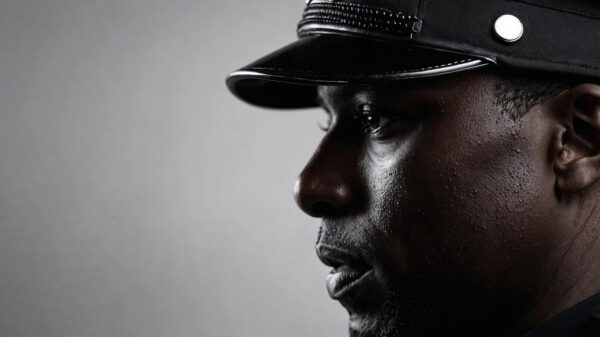








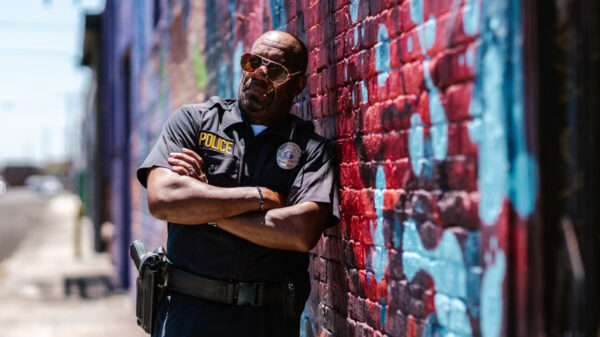




If you are serving as a local police officer today, you are living through one of the most challenging seasons our profession has ever faced. Public anger, social media outrage, shrinking applicant pools, and growing hostility toward officers have combined to create a level of stress that is grinding many of us down. For a lot of officers, the tank is empty and there’s not a gas station in sight.
Yet Scripture offers a very different way to understand and experience our profession. In a letter to believers in Rome, Paul wrote:
“Let every soul be subject to the governing authorities. For there is no authority except from God, and the authorities that exist are appointed by God. Therefore whoever resists the authority resists the ordinance of God, and those who resist will bring judgment on themselves. For rulers are not a terror to good works, but to evil. Do you want to be unafraid of the authority? Do what is good, and you will have praise from the same. For he is God’s minister to you for good. But if you do evil, be afraid; for he does not bear the sword in vain; for he is God’s minister, an avenger to execute wrath on him who practices evil.” (Romans 13:1-4)
Did you catch something important here? Paul describes governing authorities as “ministers” of God—using the same root word that is used elsewhere of those who serve in church ministry. That means what we do in a patrol car is not spiritually “lesser” than what a pastor does in a pulpit.
Both are forms of ministry, and both are accountable to the same holy God.
Many of us came into law enforcement with mixed motives. Some of us, like I once did, were looking for a stable paycheck, good benefits, or a way to support our families after growing up with little financial security. Others followed a family tradition or were simply fascinated by the work. Very few of us began with a fully formed sense of divine calling. In fact, I was a committed atheist for the first 8 years of my law enforcement career.
But once I became a follower of Christ, my attitude about the profession (and my duties as an officer) changed. I knew I could no longer afford to see this as “just a job.”

If our deepest identity is “cop,” then every criticism, complaint, or video clip that paints officers in a bad light is going to feel like a direct attack on our soul. When our identity is tethered to public approval, then every cultural swing against law enforcement becomes spiritually devastating. And right now, that pendulum has swung hard. If our deepest identity is 'cop,' then every criticism, complaint, or video clip that paints officers in a bad light is going to feel like a direct attack on our soul. Share on X
If, however, our identity is in Christ and our job is an act of obedience to Him, the ground underneath our feet becomes far more stable. We are no longer ultimately serving our agency, our chief, our community, or even our own sense of heroism. We are serving Christ, in uniform. Our evaluations, our commendations, and even our public reputation are no longer the source of our worth.
They are simply circumstances in which we remain faithful.
In the years I have been counselling law enforcement officers, I’ve heard many of us say something akin to: “I feel called to this work.” I know I also said it, even long before I was a Christian. I think we are expressing something we know to be innately true. But it raises a crucial question: If we’re feeling “called,” who or what is the “caller”?
If we believe the “caller” is our community, what happens when that community turns on us? If we believe the “caller” is our department, what happens when politics change, leadership shifts, or our agency distances itself from us in a crisis? If we believe the “caller” is our own desire to be a protector, what happens when years of trauma, disappointment, and betrayal leave us cynical and exhausted?
Only when God Himself is the Caller does our calling remain secure.
When our orders come from the King of Kings, we can endure criticism, unfair suspicion, media distortion, and even institutional failure without losing our footing. We still hurt, still struggle, still grieve—but we are not untethered. We know who sent us, and we can trust the anchor of our soul.
The culture in which you and I have worked is becoming more polarized and less civil. Social media is training people to speak in the most hostile, demeaning ways, often from behind anonymous accounts. Unmoderated anger is now rewarded by algorithms because it keeps people engaged and screaming at each other. This is toxic for public discourse, and it is deadly for any serious, thoughtful conversation about law enforcement and justice.
It’s also part of a much deeper shift.
The “pendulum” of public approval has always swung back and forth. Every generation sees its own crisis. My father was deployed to the Watts Summer riots, I was deployed to the Rodney King riots, and my son was deployed to the George Floyd riots. In and between these changing seasons, the pendulum of approval has swung toward or against us. But as we drift further from God as a culture, the table upon which the pendulum sits is beginning to tilt against us. Each swing of the pendulum goes out further and returns less. In that environment, officers will continue to be vilified, misunderstood, and, at times, personally targeted.
We cannot withstand that trajectory on willpower alone. We must, instead, root ourselves in the unchanging character of God and the unshakable calling He has placed on our lives.
In officer marriage resiliency counselling, we often say, “We can give you tools, but the most important thing is to introduce you to the Toolmaker.” The same is true for our careers. We can develop tactics, policies, training, and wellness practices – all of which matter – but if we don’t know the One who designed us, called us, and will ultimately judge us, we will eventually be crushed by this job.
So let me encourage you to see your badge as ministry rather than simply employment, let your identity in Christ anchor you when the culture rages, and remember that your real “caller” is your Savior.
You may feel unseen and unappreciated by the world, but you are fully seen by the God who called you into this work. He is the One who will sustain you when the tank is empty, and He is the One who will say, “Well done,” even when no one else is willing to encourage you.
To dive deeper, here is my interview with Frank Turek about the importance of Law Enforcement:
Here is my interview with Bill Arnold:
Also, if you’re a police officer and you haven’t yet trusted the Savior who is the “Caller” behind your “calling,” there is no better time than now. The guidance and protection of God is available for anyone who seeks Him.
























Michael Williams
February 10, 2026 at 9:15 am
Well done brother. God bless.
Pingback: Rookie Cop on His First Solo Shift Saves a Life… And Points Us to the Ultimate Rescuer - The Thin Blue Life
Pingback: Stop Bringing the Station Home: How to Break Your Old Blueprint and Build a New Marriage - The Thin Blue Life
Pingback: From PTSD to Post Traumatic Growth: How to Rewrite the Story of Your Marriage After Trauma - The Thin Blue Life