








On the first Tuesday of August, neighborhoods across America participated in an event that rarely makes the national headlines in the way a critical incident does. Yet National Night Out may reveal something essential about the future of law enforcement: lasting public safety is not built only in moments of crisis. It is also built through relationships.
National Night Out is a nationwide community-building campaign designed to promote police-community partnerships, neighborhood connection, and crime prevention. What began with neighbors turning on porch lights has grown into an annual opportunity for officers, families, businesses, churches, and community organizations to gather under positive circumstances. The goal is simple but significant: help neighbors know one another, help communities know their officers, and make it easier for people to work together before trouble comes. Learn more about National Night Out.
This year, Philadelphia provided a powerful picture of what that can look like. Across the city, residents met with Philadelphia police officers, Pennsylvania state troopers, and community partners for block parties, family activities, music, food, resource tables, and conversations. At Fox Chase Elementary School, the evening began with a community bike ride and included the giveaway of 20 bicycles to children. Families played games, enjoyed treats, and connected with representatives offering practical information related to health care, education, and workforce development. You can read the full local report from 6abc Philadelphia here.
It would be easy to view an event like this as merely ceremonial—a pleasant evening with food, music, bikes, and squad cars. But that would miss its deeper value. These gatherings place officers and citizens in the same space without the immediate pressure of a call for service, an investigation, a traffic stop, or an emergency. A child can meet the officer who patrols his street. A parent can ask a question without feeling rushed. An officer can learn the name of a neighborhood resident who may one day need help—or be in a position to provide crucial information.
That is where trust begins: face-to-face.
Law enforcement officers know how often they encounter people at the hardest moments of their lives. Officers are called when someone is afraid, angry, injured, victimized, missing, intoxicated, mentally ill, or involved in criminal behavior. Those contacts matter, and officers must bring courage, restraint, competence, and compassion to each one. But when every encounter takes place in a crisis, it can be difficult for either side to see the full humanity of the other.

National Night Out helps change that dynamic. It reminds both officers and residents that they are not opposing teams occupying the same city. They are neighbors with a shared interest in safe streets, thriving children, healthy families, and communities where people do not have to live in fear.
For Christian officers, this kind of presence has particular significance. Scripture calls believers to pursue justice, love mercy, and walk humbly with God. That calling does not end when an officer puts on a uniform. In fact, the uniform may create daily opportunities to live it out. Humility means recognizing that the badge does not make an officer more valuable than the people he or she serves. Mercy means seeing people as more than their worst day or worst decision. Justice means enforcing the law faithfully while remembering that every person bears God’s image. Scripture calls believers to pursue justice, love mercy, and walk humbly with God. That calling does not end when an officer puts on a uniform. In fact, the uniform may create daily opportunities to live it out. Share on X
In our article, “How Cops Can Serve Christ by Breaking Down Barriers,” we considered the danger of “otherism”—the human tendency to divide the world into “us” and “them.” That temptation affects everyone. Citizens can stereotype officers, assuming they are all distant, harsh, or uninterested. Officers can also fall into the trap of making assumptions about people or neighborhoods before taking time to listen. Pride divides. Humility listens. National Night Out provides an unusually practical setting in which those barriers can begin to fall.
The same is true for young people. In “What the Gang Detail Taught Me About Fatherhood,” we reflected on the painful connection between fatherlessness, a hunger for belonging, and the destructive pull of gangs. Many young people are searching for direction, accountability, protection, and affirmation. While no officer can replace a father, officers can still model integrity, discipline, respect, courage, and concern. A conversation over a bicycle giveaway, a game played with a child, or a respectful interaction with a teen may seem small. But small moments can plant seeds.
This does not mean that community events eliminate crime, erase distrust, or solve every social problem. They do not. Policing remains demanding, dangerous, and morally complex. Communities still face violence, addiction, broken families, exploitation, and fear. But healthy relationships make it more likely that people will communicate, cooperate, and act together when problems arise.
That is why events like National Night Out matter.
They demonstrate that public safety is not simply something delivered by law enforcement to passive citizens. It is a shared responsibility. Officers bring training, authority, sacrifice, and a willingness to run toward danger. Residents bring local knowledge, watchful care, community leadership, and the daily commitment to love their neighbors.
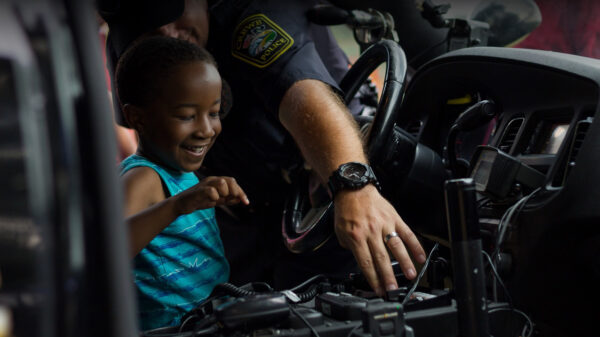
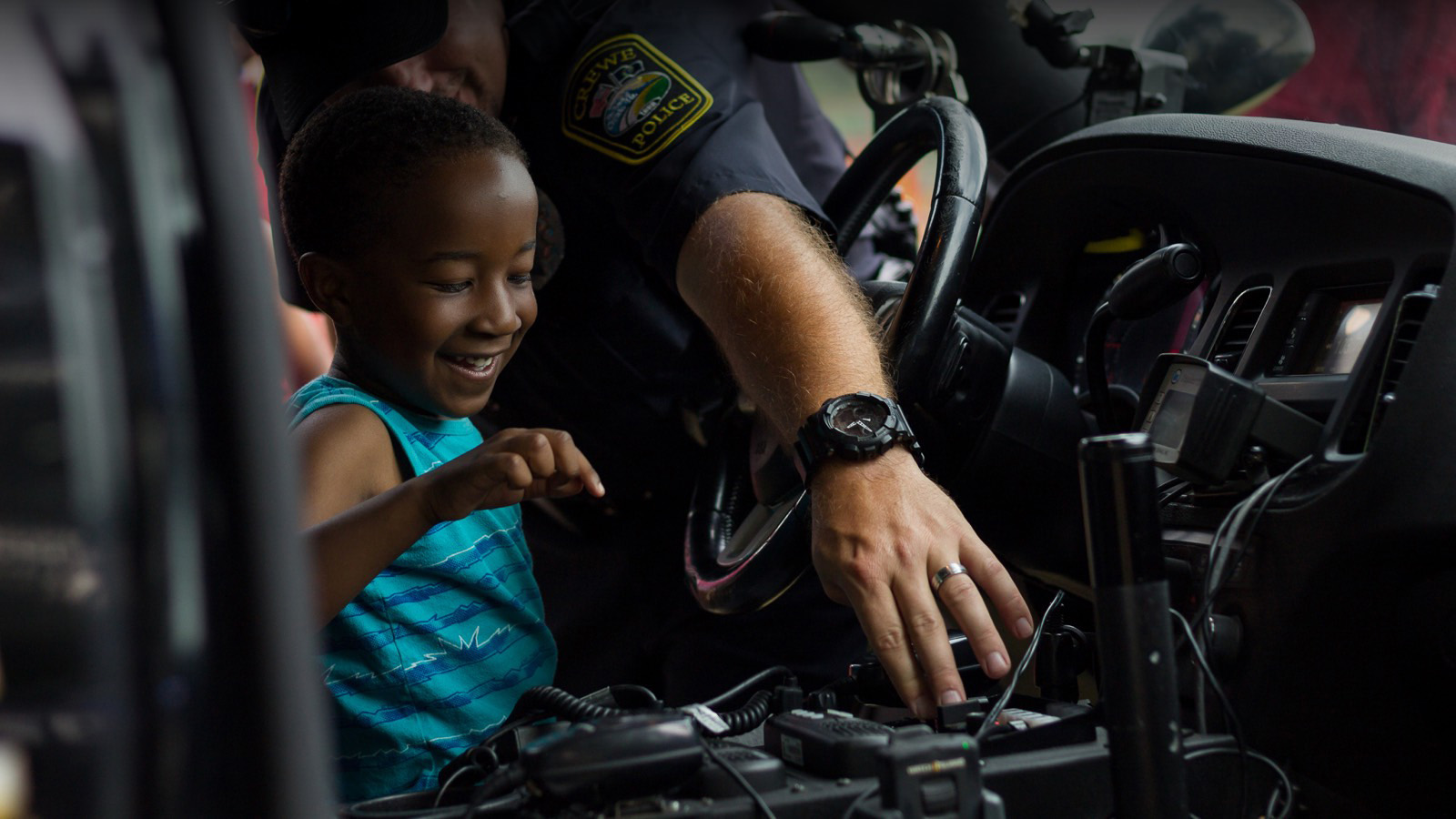
When officers stand among families in a park, when children climb into patrol vehicles, when neighbors share a meal, and when community partners offer real help, the badge becomes more than a symbol of authority. It becomes a reminder of service.
Trust is not manufactured by slogans. It is built slowly, honestly, and personally—one conversation at a time. If you haven’t yet trusted the Savior who energizes every face-to-face conversation, there is no better time than now.