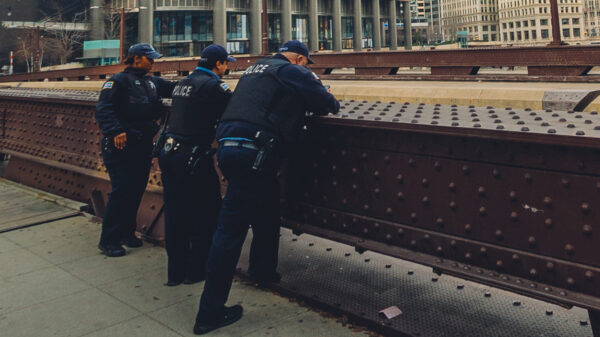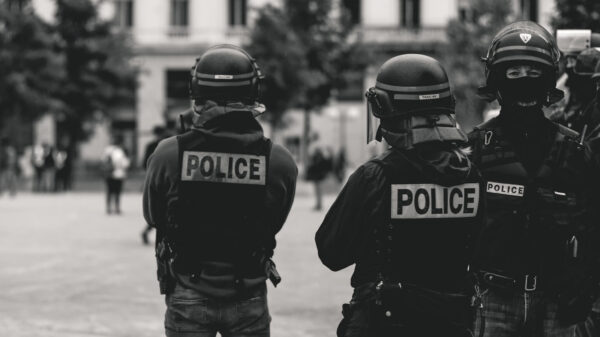







As law enforcement officers, we stand today in a strange and often demoralizing moment. Many of us feel increasingly targeted, misunderstood, and taken for granted by a culture that enjoys the benefits of order while questioning the value of those who provide it. Yet the very pressures that make the job harder also reveal how foundational and necessary the profession truly is.
Every profession in a community quietly depends on the work of law enforcement. A medical practice cannot function if patients and staff cannot safely enter the building. A business cannot thrive if theft and violence are unchecked. Families cannot flourish if neighborhoods are abandoned to those who prey on the vulnerable.
As law enforcement officers, we are not a privileged class sitting above the culture; we are, instead, a foundational pillar beneath it. That is precisely why misconduct matters so much: a crack in the foundation will eventually show up as a crack in the walls of culture. Good officers feel this weight. We know there is very little margin for failure, yet we continue to stand that post anyway. As law enforcement officers, we are not a privileged class sitting above the culture; we are, instead, a foundational pillar beneath it. Share on X
Officers are drawn from the same flawed human population as everyone else. Of course there are bad cops, and no one despises them more than good cops who refuse to be represented by the worst among us. But the national spotlight tends to focus on a tiny number of high‑profile incidents and treat them as the norm.
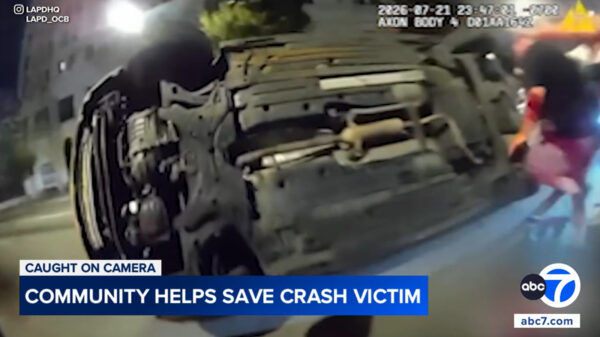
The widespread use of body‑worn cameras has quietly told a fuller story. In many agencies, these cameras have cleared officers far more often than they have incriminated us, confirming that the vast majority are telling the truth and acting within policy under intense, split‑second pressures. This does not excuse misconduct; it simply reminds the public that most officers are doing the job honorably, day after day, with little recognition.
There has always been tension between free people and those tasked with enforcing the law. No one is thrilled to see a patrol car in the rearview mirror. But today’s hostility often runs deeper. In some corners of the culture, there is an erosion of belief in any objective right or wrong. If there is no such thing as real moral wrongdoing, then laws become optional, and the people who enforce them look unnecessary—or even oppressive.

For officers, this can create a profound crisis of purpose: “Why am I risking my life for a community that questions whether my work has any moral value?” Yet the need for order does not disappear when belief in objective morality declines. It simply gets filled by raw power, louder voices, or more aggressive state control. In that environment, principled law enforcement is more—not less—essential.
Across cultures and eras, first responders have reflected two complementary moral realities: truth and justice on one side, mercy and grace on the other. Law enforcement leans toward truth and justice, drawing lines, confronting evil, and protecting the innocent. Fire and EMS lean toward mercy and grace, rushing toward pain and injury regardless of who is suffering. Even a wounded robber will call the medics when shot.
These are not competing values; they belong together. There is no real mercy if there is no truth about what is right and wrong. There is no trustworthy justice if it cannot be tempered by compassion. When officers hold these in balance—firm in standards, yet robust in compassion—they mirror something of God’s own character to a watching world.
The question facing many in uniform is painfully simple: “Is this still worth it?” The pay rarely matches the risk. The scrutiny can feel relentless. The culture’s appreciation seems thin. Yet if law enforcement crumbles, every other calling—medicine, education, business, even ministry—becomes harder, more dangerous, and less effective.
Choosing to remain in this work, or to enter it at all, is not a grasp at power; it is an act of service that carries a heavy, sometimes thankless responsibility. Officers who continue to stand the line, pursuing both justice and mercy with integrity, are not just holding a job. They are guarding the conditions under which every other good work in the community can exist at all.
This article is a summary of my interview: Former Dateline NBC Consultant on the Rise of Violence Against Local Law Enforcement. If you haven’t yet trusted the Savior who can give you the courage to serve in the our incredible important profession, there is no better time than now.