












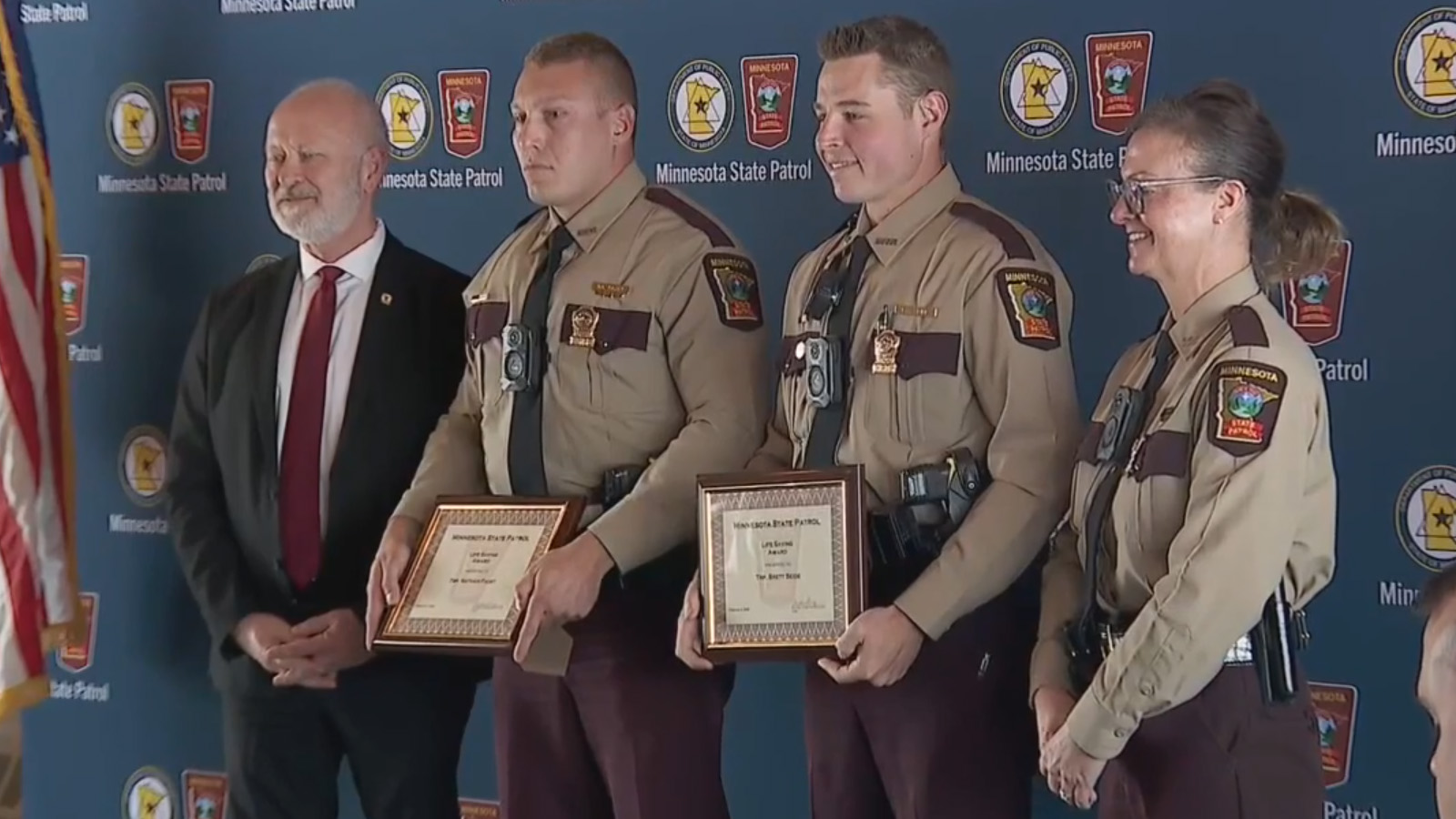
If you’ve ever stood in a dress uniform at an awards ceremony, you know how strange it can feel. On one hand, standing before members of your community, you’re grateful to be recognized. On the other, standing alongside and in front of your fellow officers, you’re thinking, “I just did what any of us would have done.”
A recent Minnesota State Patrol ceremony captures this tension perfectly. Honoring troopers and deputies who pulled people from burning vehicles, coordinated a mass‑shooting response, and rescued a man from a grain bin, the ceremony reminded everyone in attendance that it’s good to honor courage.
But as Christian police officers, we know we can’t live for that kind of spotlight.
Scripture gives us a framework to help us understand why our work matters, even when nobody is watching. The Bible assumes and affirms authority grounded in proximity: elders on hand at the city gate (ie. Deuteronomy 21:19), judges who know the parties involved (2 Chronicles 19:5–7), and leaders who can put names to the problems and concerns in their community (Proverbs 27:23). Today, that looks a lot like local officers who know the streets and the stories behind the people that live there.
That’s both a burden and a privilege.
We are not anonymous in our own towns. People see us in uniform on the call and then see us out of uniform at the grocery store, our kids’ games, or maybe at church. That proximity can either amplify criticism or strengthen credibility. When our community watches us act with integrity shift after shift, even though they may disagree with a law or a decision, they can still learn to trust our character, if we allow God to direct our actions.

At the same time, we’re serving in a culture that worships attention. Everyone has a camera and a platform. The world keeps whispering: “Be seen. Be followed. Be famous.” We’ve watched people commit crimes just to gain “street cred” or to get their name on the news. We’ve seen ordinary folks chasing online notoriety like it’s the path to significance. And if we’re honest, that same temptation can creep into our work. It’s easy to start thinking about our status among co-workers or our notoriety after a big award ceremony.
The danger is subtle but real.
When recognition becomes the goal, service becomes a tool for self‑promotion instead of an act of service and practical worship. We start measuring our worth by applause, promotion, or accomplishment instead of by our standing in Christ.
In this environment, humility isn’t an option. It’s a necessary, protective shield. In my career as a detective who was repeatedly involved in evaluating juries, I learned firsthand how pride can blind people to the truth. We did our best to select jurors who demonstrated some level of humility because we knew they were far more likely to be open and teachable.
The same is true for us as police officers. Pride in our knowledge, experience, or reputation can close our ears to the needs and concerns of our community and to the God we say we serve.
Humility, by contrast, keeps us grounded. It allows us to admit mistakes, apologize when wrong, and keep learning instead of foolishly coasting on our reputation. It reminds us that we’re servants, not celebrities. Humility helps us see our gifts as tools God entrusted to us for the good of others.
So, what does this look like on the street? It means showing up on time and coming prepared, even when we’re exhausted and nobody will “like” it online. It means treating a difficult citizen with dignity because we know every person bears God’s image. It means taking correction from a supervisor without letting bitterness fester, trusting that our identity isn’t grounded in the job but in the Creator who allows us to serve. It means turning down chances to “play to the camera,” and choosing instead to do the quiet, noble thing when only our Savior will ever see it.
As a Christian in uniform, our value is grounded in more than a commendation, medal, or news article. Our worth comes from the God who called us and knows us by name. Events like the Minnesota ceremony are good gifts; they let a community say “thank you” for what we’ve done. Let’s receive that gratitude with appreciation, then lay it back down at the feet of the One who gave us the courage to act in the first place.
Today, whether we’re answering mundane calls or running toward real danger, remember: in God’s design, local cops matter. We have the opportunity to reflect God’s nature and character in a chaotic world. Let’s serve with courage, guard our heart from the snare of celebrity, and cultivate a quiet, resilient humility. The crowd may never know our name, but the One who matters most already does, and He will not forget our labor. Let’s serve with courage, guard our heart from the snare of celebrity, and cultivate a quiet, resilient humility. The crowd may never know our name, but the One who matters most already does. Share on X
Have you investigated the case for Christianity? Have you committed your life to the One has called you to this profession? Don’t waste another minute; do it today. And to learn much more about the importance of humility, how it contributes to human flourishing, and establishes the reliability of the Biblical record, please read The Truth in True Crime: What Investigating Death Teaches Us About the Meaning of Life.






















Pingback: The Cop Attitude That Can Save Your Marriage: Why Humility Beats Being ‘Right’ Every Time - The Thin Blue Life