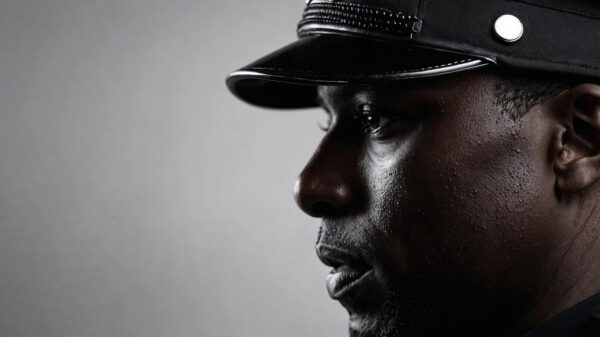















Every officer has seen it: one bad attitude can turn a simple contact into a mess. We know how posture, tone, and pride can escalate a traffic stop or a disturbance call in seconds. The same thing happens at home. Many police couples struggle, not because we lack techniques, but because we’re carrying the wrong attitude into every conversation. From a Christian perspective, the foundational attitude that changes everything isn’t confidence, toughness, or “never backing down.”
It’s humility.
Scripture ties humility to transformation, and modern research supports this claim: humble people thrive in their relationships, their work, and their mental and physical well-being. For police marriages, humility is the difference between a constant standoff and a home that actually feels safe for both spouses. For police marriages, humility is the difference between a constant standoff and a home that actually feels safe for both spouses. Share on X
As officers, we love tools – gear, devices, and technology that make our job easier. In marriage, we often talk about tools: communication skills, conflict-resolution steps, love languages, and apology languages. But these tools only work if they are grounded in an important pre-requisite. These marriage tools must come out of a toolbox called humility.
We can know all the right phrases and de-escalation approaches, but if we’re still determined to win every argument or prove our spouses wrong, those tools will feel like weapons instead of useful approaches. Ephesians 4:2 calls believers to be “completely humble and gentle; be patient, bearing with one another in love,” before Scripture starts talking in detail about marriage in Ephesians 5. In John 13, Jesus shows what that looks like by taking off the robe of “Teacher and Lord” and putting on a towel to wash His disciples’ feet.
If Jesus, God incarnate, was willing to serve his human disciplines, cops can learn to do the same in their marriages.

Law enforcement culture trains you to be decisive, authoritative, and in control. That’s what’s often necessary on any given call. But if we bring the same “I’m in command” posture home, three things tend to happen. First, we treat disagreements like reports to correct instead of hearts to understand. Second, we view our spouse’s reactions as “overly emotional” rather than as data about how they’re hurting. Finally, we default to our own experience as the standard and unintentionally minimize the experiences of our spouse.
Our base nature, as humans, is fallen, selfish, and prideful. Police work doesn’t create pride; it often just gives it a badge, a gun, and years of reinforcement. Without humility, every conflict is a contest, and our marriages becomes a win-lose game that both spouses eventually lose.
You’ve heard people say, “marriage is 50/50,” or the upgraded version, “it should be 100/100.” The truth is something much more dramatic. Thriving marriages are “100‑to‑zero” relationships. When each spouse gives 100% with zero expectation of return, marriages thrive.
From a cop’s point of view, that sounds like a good way to get abused. We’ve all been to domestic violence calls where one spouse is giving their all, while the other simply takes advantage of their kindness. But that’s where the Christian worldview makes all the difference. If both spouses ae Christ-followers, we can approach every marital encounter knowing that how we treat our spouse is between us and God, and how our spouses treat us is between them and God.
We’re not loving sacrificially because our spouses “deserve it” this week; we’re doing it because the God who saved us has asked us to. Once that clicks, a shift happens: instead of asking “What am I getting out of this?”, we start asking, “Am I being faithful in how I love and serve?” That’s humility in action.
Humility isn’t about thinking you’re worthless; it’s about seeing ourselves accurately before a holy God and other people. We can’t fake it, but we can step toward it. Here are a few practical ideas and practices that should make sense to us as police officers:
Properly estimate who you are. Let your spouse safely point out your strengths and blind spots. Marriage is like body‑cam for our souls. It shows what we’re really like, not just how we see ourselves.
Celebrate others, especially your spouse. Make it a habit to call out specific things your spouse does well. This works against the internal narrative that we’re the one carrying all the weight.
Compare vertically, not horizontally. Stop measuring yourself against weaker officers or more dysfunctional couples. Compare your heart to Christ’s example in passages like John 13 and Philippians 2.
Practice gratitude on purpose. Pride says, “I deserve more.” Humility says, “I’m grateful I’ve been given this.” Make a written or mental list of what you appreciate about your spouse and your life, even on hard weeks.
In police work, we often act first and let our feelings catch up later. Humility works the same way: it’s often easier to act our way into feelings than feel our way into actions. Start acting like a humble servant at home, and over time our hearts will begin to shift.
If you haven’t yet embraced the serving Savior who gave his life for others and can show us how to do the same, there is no better time than now to start life anew and share God’s life-changing message with others. The wisdom, guidance, and protection of God is available for anyone who seeks Him.